
 Joaldo Lima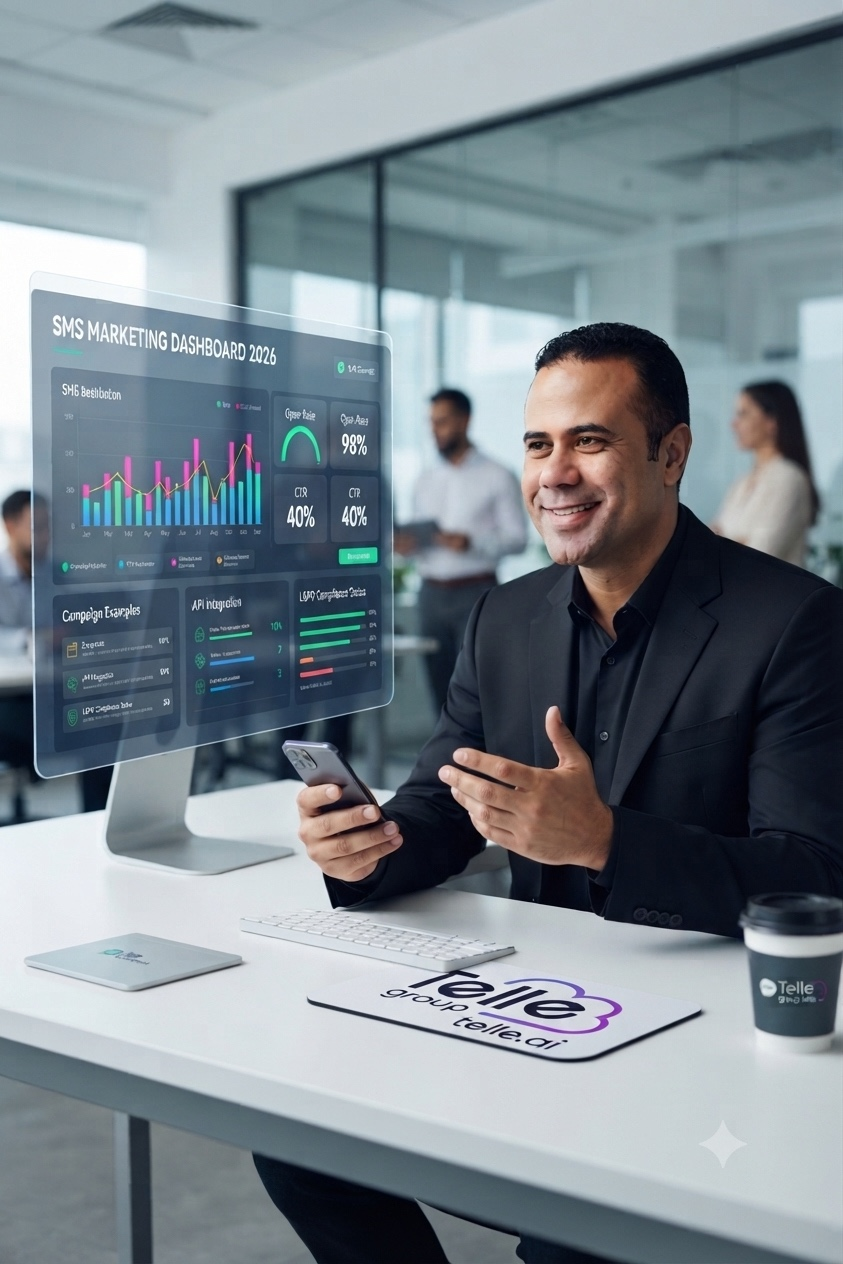
In 2026, SMS Marketing goes far beyond triggering short messages.
For companies that want retention, journey recovery, transactional communication, and multi-channel integration, SMS needs to be planned as part of the relationship strategy.
This involves platform, API, CRM, segmentation, LGPD, opt-out, metrics and automation. When these elements work together, SMS ceases to be an isolated action and becomes a performance channel.
What is SMS Marketing in 2026?
SMS Marketing is the strategic use of text messages to communicate offers, reminders, confirmations, alerts, warnings, and business or operational journeys.
The channel remains relevant because it is simple, straightforward and does not depend on the specific feed, algorithm or application opened at the time of the message.
But the scene has changed. Today, companies need to think about:
- consent and LGPD;
- base segmentation;
- sending frequency;
- transactional and promotional messages;
- integration with CRM;
- traceable links;
- automation by events;
- ROI analysis;
- quality of delivery;
- opt-out.
Choosing an SMS platform
When hiring an SMS gateway or sending platform, don’t just look at price per shot.
Unit cost matters, but actual performance depends on stability, support, documentation, reporting, security, and integration capability.
Evaluate points such as:
- Well documented HSE API;
- management panel;
- delivery reports;
- technical support;
- data security;
- high volume capacity;
- integration with CRM;
- opt-out control;
- list segmentation;
- traceable links;
- separation between transactional and promotional SMS.
An inexpensive platform that delivers little can be expensive when it affects sales, support, or customer experience.
SMS Marketing vs WhatsApp Business
SMS and WhatsApp Business don’t have to compete.
They may have different roles.
WhatsApp works well for conversations, service, longer relationship, and media interaction. SMS works great for short, urgent, objective, app-independent messages.
Examples:
- SMS for confirmation, alert, recovery, reminder and status;
- WhatsApp for service, consultative conversation and support with history;
- email for long communications, documents and formal records.
A good multichannel strategy chooses the channel by context, not fashion.
transactional SMS vs promotional SMS
This difference is important for strategy and compliance.
Transactional SMS informs something connected to the customer journey, such as:
- order confirmation;
- delivery status;
- security code;
- scheduling notice;
- payment reminder;
- request update.
Promotional SMS has a commercial purpose, such as:
- coupon;
- offer;
- campaign;
- invitation;
- cart recovery;
- launch.
Promotional messages require special care with consent, frequency, targeting, and unsubscribing.
How to create and segment lists
A good campaign starts with a good foundation.
Avoid buying lists. In addition to damaging reputation, this increases legal risk and reduces performance.
Prefer bases generated by real relationship:
- active customers;
- leads who accepted contact;
- registered users;
- recent buyers;
- interested in specific campaigns;
- contacts with a defined purpose.
Then, segment by context:
- funnel stage;
- product of interest;
- location;
- purchase history;
- behavior;
- service status;
- expiration date;
- inactivity.
The more context, the less chance the message has of looking spammy.
Bulk Shipping Best Practices
Sending bulk SMS doesn’t mean sending anything to everyone.
SOME GOOD PRACTICES
- identify the company;
- be direct;
- use clear CTA;
- avoid excessive abbreviations;
- respect appropriate schedules;
- frequency control;
- use reliable links;
- track metrics;
- offer opt-out when applicable;
- test messages before escalating.
Example:
Telle: Your demo is confirmed for tomorrow at 10am. To reschedule, go to the secure link sent by our team.
Short, clear and useful.
LGPD, opt-out and security
SMS Marketing needs to respect the LGPD.
This means defining purpose, legal basis, base security, adequate retention, supplier governance and unregistration when applicable.
Important precautions:
- keep a record of consent when necessary;
- respects unsubscribe requests;
- do not expose sensitive data;
- protect API keys;
- limit access to the base;
- document the purpose of the campaigns;
- avoid misleading messages;
- review content prior to submission.
The opt-out should be simple. When the customer asks to stop, the operation needs to honor this quickly.
Character limits and concatenated SMS
SMS is a short channel by nature.
Long messages can be divided into parts, the so-called concatenated SMS. This can increase cost, impair reading, and reduce clarity.
Therefore, prefer:
- one idea per message;
- Single CTA;
- objective language;
- short and reliable link;
- clear brand identification.
If the subject requires a long explanation, perhaps the SMS should just direct to a page, email or service.
Automation with CRM, ERP and e-commerce
SMS gains strength when it is triggered by events.
Integrations with CRM, ERP, HubSpot, Salesforce, Shopify, WooCommerce or own systems allow you to trigger messages at the right time.
Common cases:
- cart recovery;
- scheduling confirmation;
- appointment reminder;
- order status;
- delivery confirmation;
- amicable collection;
- contract renewal;
- security alert;
- reactivation of inactive customers;
- after-sales.
Automation reduces manual labor and increases consistency.
HSE metrics and ROI
To find out if SMS Marketing works, measure.
Important indicators:
- delivery fee;
- failures by operator;
- clicks on links;
- conversion;
- unsubscribers;
- responses;
- revenue per campaign;
- cost per conversion;
- impact on cart recovery;
- no-show reduction;
- reduction of calls.
Use trackable links and UTMs when it makes sense, always maintaining the security and trust of the URL.
Why aren’t my texts coming in?
Delivery failures can have several causes:
- invalid number;
- telephone without signal;
- locking of the appliance;
- outdated base;
- route problems;
- suspicious content;
- excess shipments;
- integration error;
- temporary unavailability of operator.
So choose a platform that delivers reports, support, and technical visibility.
Use cases by segment
SMS can work in multiple markets:
- clinics: reminders and no-show reduction;
- e-commerce: cart retrieval and delivery status;
- logistics: delivery confirmation and tracking;
- financial: reminders, alerts and authentication;
- services: confirmation of schedule and renewal;
- safety: critical alerts;
- service: update of requests;
- sales: targeted campaigns.
The secret lies in using SMS to solve a real customer need.
SMS Marketing as an operation, not an improvisation
By 2026, companies that treat SMS as isolated triggering are losing efficiency.
The best operations treat HSE as part of a communication architecture: integrated, segmented, measurable, secure and aligned with the LGPD.
Tellegroup supports companies with corporate SMS, messaging API, cloud telephony, cybersecurity and solutions for B2B service.
Talk to a Tellegroup expert and see how to structure SMS Marketing with planning, automation and control.