
 Joaldo Lima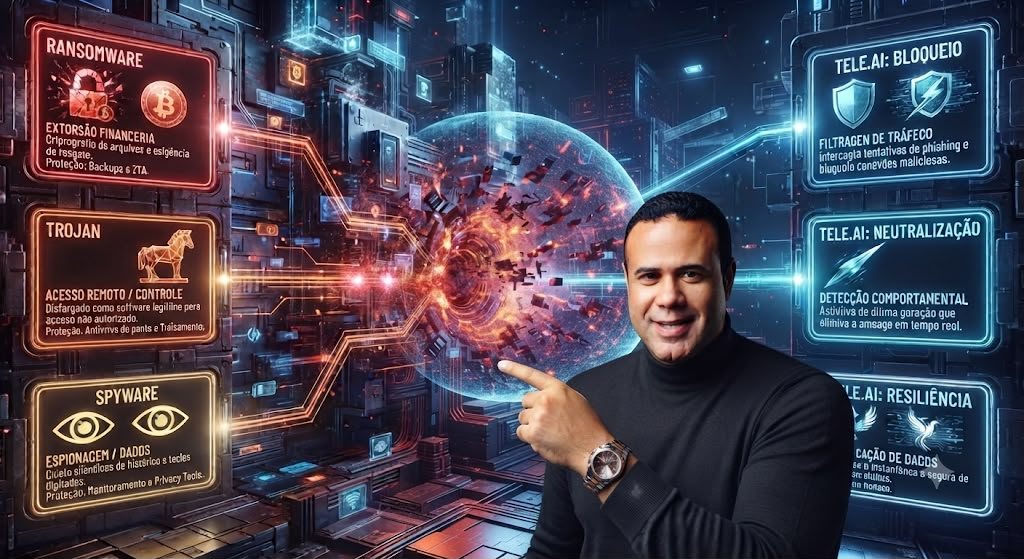
In the current scenario of cyber threats, understanding the nuances of malicious software is one of the first steps to strengthening information security. Terms such as cyber attack, data protection, cybersecurity and digital security are no longer the exclusive concern of IT and have become part of any company’s continuity strategy.
Among the most relevant types of malware are ransomware, trojans and spyware. Each one acts differently, but they can all cause financial losses, data leaks and severe damage to reputation.
What is malware?
Malware is any software created to perform malicious actions on devices, networks or systems. It can steal information, open access ports, spy on users, hijack files or disrupt operations.
Infection can happen through malicious attachments, fake links, compromised websites, untrustworthy downloads, stolen credentials or exploiting vulnerabilities in outdated systems.
Ransomware: digital extortion and data hijacking
Ransomware is one of the most devastating threats in the corporate environment. It encrypts files, databases or entire systems and demands a ransom payment, usually in cryptocurrencies, to supposedly grant access.
In modern attacks, extortion can go beyond encryption. Many groups also copy sensitive data before locking down systems and threatening to release the information if the company doesn’t pay.
Common impacts of ransomware
- Unavailability of critical systems.
- Interruption of service, sales or internal operations.
- High recovery and incident response costs.
- Risk of leakage of personal or strategic data.
- Damage to reputation and possible regulatory sanctions.
Trojans: the digital Trojan Horse
Trojans disguise themselves as legitimate software, documents, installers or trusted updates. The objective is to convince the user to perform something that appears normal, but which installs a threat into the environment.
Once active, a Trojan can create backdoors, allow unauthorized remote access, steal credentials, download other malware, or pave the way for more serious attacks.
Why are Trojans dangerous?
They rely heavily on social engineering. This means that the fault is not always just in the system, but also in the trust that the user places in fake files, links and messages.
Spyware: silent spying
Spyware acts discreetly, monitoring user activities and collecting information without consent. It can capture browsing history, credentials, screens, typed data and sensitive information.
An especially dangerous form is the keylogger, which records keystrokes and can capture passwords, codes, banking details and corporate access.
Comparison table: threats and impacts
| Threat | How it works | Main impact | Priority defense |
|---|---|---|---|
| Ransomware | Encrypts data and demands ransom | Strike and extortion | Backup, EDR, segmentation and incident response |
| Trojan | Disguises itself as a legitimate file or software | Backdoor and remote access | Training, anti-malware and execution control |
| Spyware | Monitors activities and collects data | Credential theft and espionage | Endpoint Protection, MFA, and Monitoring |
Mitigation strategies
No single defense is sufficient. Malware protection requires technical layers, well-defined processes and staff awareness.
Firewalls and edge protection
Firewalls help filter traffic, block suspicious connections and reduce network exposure to unauthorized access.
Antivirus, EDR and behavioral detection
Modern solutions analyze behavior, not just known signatures. This increases the chance of detecting new or modified threats.
Cloud backups and 3-2-1 strategy
Backups need to be frequent, tested and isolated. The 3-2-1 strategy recommends three copies, on two types of media, with one copy outside the main environment.
Two-factor authentication
MFA or 2FA reduces the impact of stolen credentials, making it difficult to gain unauthorized access even when the password has been compromised.
System update
Patches fix vulnerabilities exploited by malware. Outdated systems increase the attack surface.
Phishing awareness
Most infections begin with social engineering. Recurring training helps teams recognize fake messages, suspicious attachments and fraudulent pages.
Digital security is business continuity
Malware is not just a technical problem. It impacts sales, service, operations, reputation and compliance. Companies that invest in layered defense, incident response, and security culture reduce the risk of successful attacks.
Want to strengthen your protection against ransomware, Trojans, spyware and other digital threats? Speak to Tellegroup and design a cybersecurity strategy suited to your environment.