
 Joaldo Lima
In the current cybersecurity scenario, a static password is not enough.
For fintechs, digital banks, wallets, payment platforms and companies that handle sensitive transactions, authentication needs to combine security, availability and good user experience.
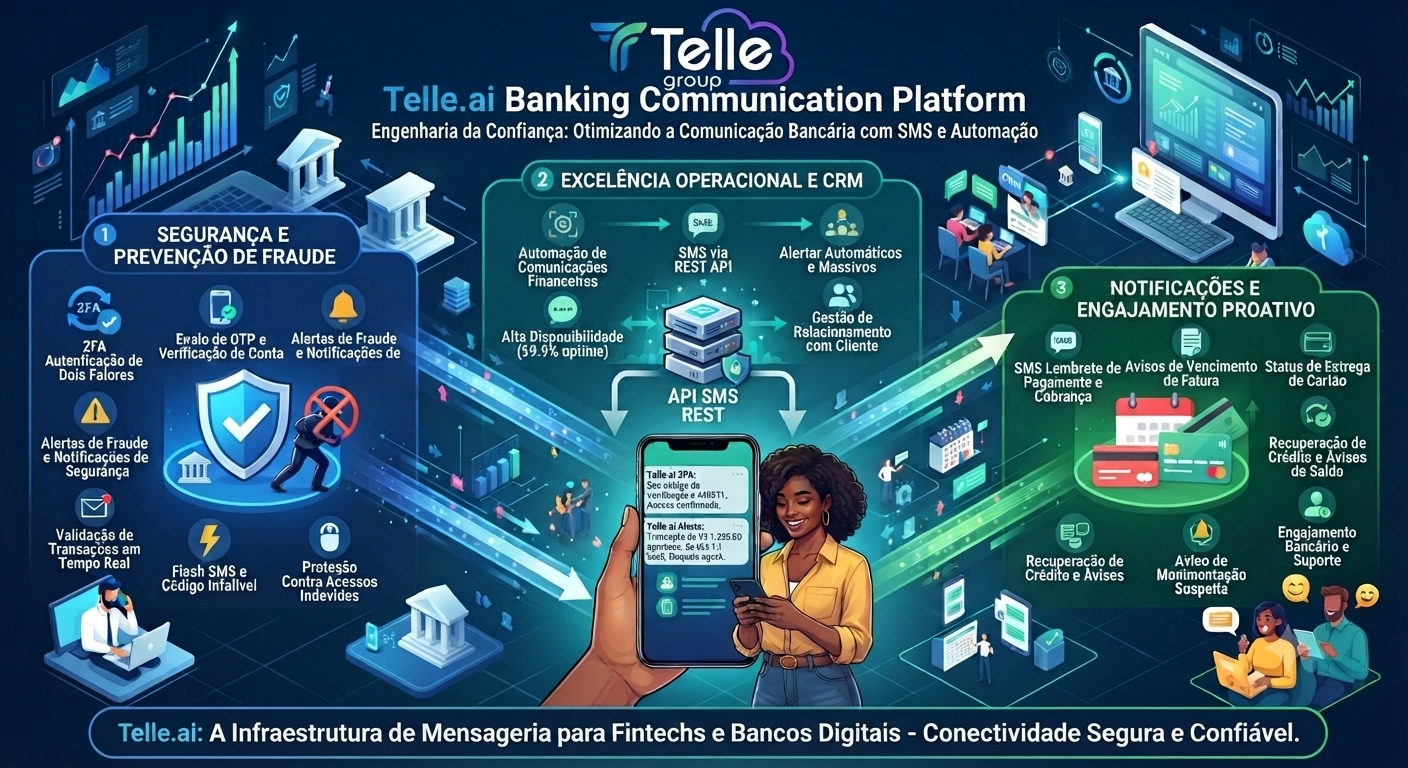
In this context, 2FA via SMS continues to be a relevant layer to confirm access, validate critical actions and reduce the risk of account misuse. It should not be treated as an isolated solution, but as part of a larger authentication, anti-fraud and monitoring architecture.
What is 2FA via SMS?
2FA stands for two-factor authentication.
In practice, in addition to the password or main credential, the user needs to confirm their identity by a second factor. In the case of SMS, this factor is usually a temporary code sent to the registered phone number.
This code is known as OTP, which stands for One Time Password. It must be random, expire quickly and only serve for that login, authorization or transaction attempt.
Basic authentication flow
A common 2FA flow via SMS in fintechs works like this:
- The user attempts to access the account or perform a critical action.
- The backend evaluates the context and decides whether to require 2FA.
- The system generates a random, single-use OTP.
- The backend only stores the OTP hash, with short expiration.
- The application calls a corporate SMS API to send the code.
- The user enters the code in the interface.
- The server validates the code, deadline, attempts and context.
- The access or transaction is approved, denied, or sent for further review.
The bottom line: critical validation needs to happen on the backend. The front end improves the experience, but it shouldn’t be the source of trust.
Choosing SMS gateway
Fintechs cannot depend on unstable messaging.
If the authentication SMS is delayed, the user abandons the login, repeats requests or calls support. If it fails frequently, brand experience and trust suffer.
When choosing an SMS API for 2FA, evaluate:
- delivery stability;
- reliable routes;
- low latency;
- redundancy;
- delivery reports;
- technical support;
- peak capacity;
- logs for auditing;
- simple integration with the backend.
In financial operations, a few seconds can make a difference.
Best practices for OTP codes
The OTP code needs to be simple for the user and safe to operate.
Some important practices:
- use random codes, preferably numeric and short enough to type;
- apply short validity, normally between 3 and 5 minutes;
- invalidate old codes when a new one is requested;
- limit incorrect attempts;
- apply temporary block on suspicious behavior;
- do not reuse codes;
- do not send sensitive data along with the OTP;
- record events for auditing and anti-fraud.
It is also important to avoid ambiguous messages. The user must understand what action that code is being used for.
Backend security
The backend is where security really happens.
Never store the OTP code in plain text. Store only one cryptographic hash, associated with the user, event, expiration date and number of attempts.
Additionally, implement:
- rate limit per user, IP, device and phone;
- automatic expiration;
- progressive blocks;
- detection of many requests;
- session context validation;
- monitoring of failed attempts;
- logs without code exposure;
- generic error messages for the user.
This set reduces the risk of brute force, abuse of submission, enumeration and exploitation of authentication flows.
Clear message and anti-fraud education
SMS text is also part of security.
A well-constructed message should indicate the purpose and reinforce that the code should not be shared.
Example:
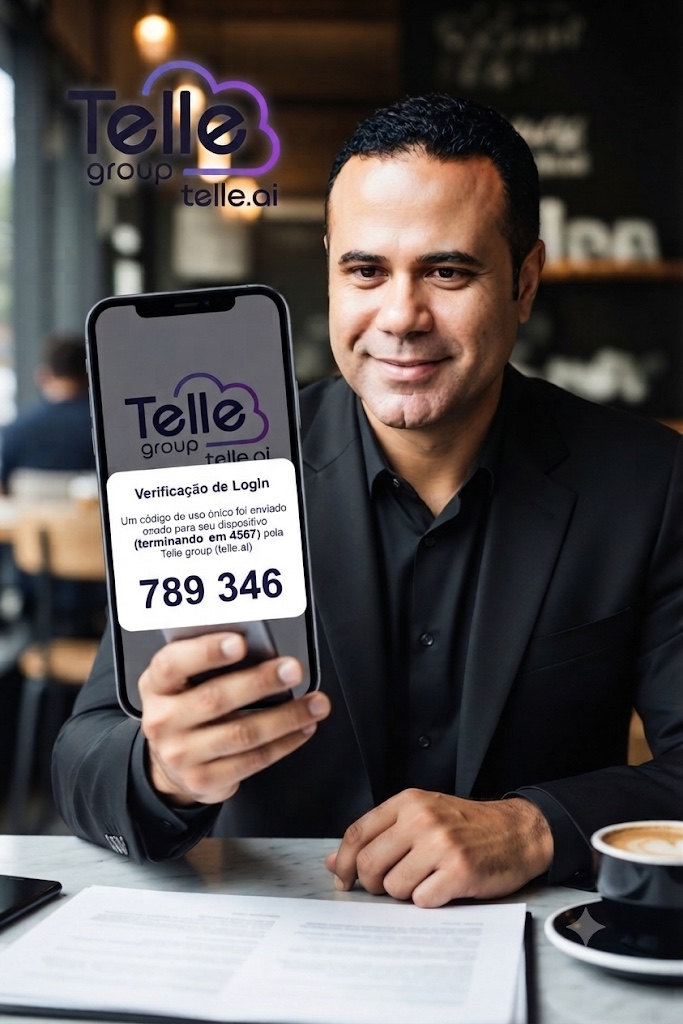
Your confirmation code is 123456. Validity: 3 minutes. Never share this code. Tellegroup does not request codes by phone or WhatsApp.
For fintechs, this precaution helps reduce social engineering scams, vishing and attempts to capture the OTP by third parties.
Delivery and latency monitoring
2FA via SMS needs to be monitored in real time.
Important metrics include:
- delivery fee;
- medium latency;
- failures by operator;
- volume of resubmissions;
- rate of expired codes;
- incorrect attempts;
- blocks due to abuse;
- authentication conversion.
When latency increases or a route becomes unstable, the operation needs to react quickly to avoid impacting login and transactions.
SMS, biometrics and authenticators
SMS has a clear advantage: reach.
It works on many devices, does not require a specific application and can serve users who have not yet configured biometrics or an authenticator.
At the same time, mature fintechs should evaluate a layered authentication strategy. SMS can work together with biometrics, device binding, behavioral analysis, push, passkeys, authenticator applications and risk engines.
The best design depends on the operation profile, regulation, transactional risk and desired experience.
Compliance and data protection
Fintechs deal with personal data and sensitive events.
Therefore, the implementation of 2FA via SMS must comply with LGPD, data minimization, access control, log retention, traceability and governance over suppliers.
It is also important to review messages to avoid unnecessary exposure of financial information, balances, documents or transactional details.
2FA as a layer of trust
2FA via SMS is not just sending a code. It is a flow of security, experience and operational reliability.
When implemented well, it helps protect accounts, validate critical actions, reduce simple fraud and provide greater security for the end user.
Tellegroup supports companies with corporate SMS, transactional messaging, cloud telephony, cybersecurity and solutions for operations that require availability and control.
Speak to a Tellegroup expert and see how to structure a 2FA flow via SMS for your fintech or financial platform.