
 Joaldo Lima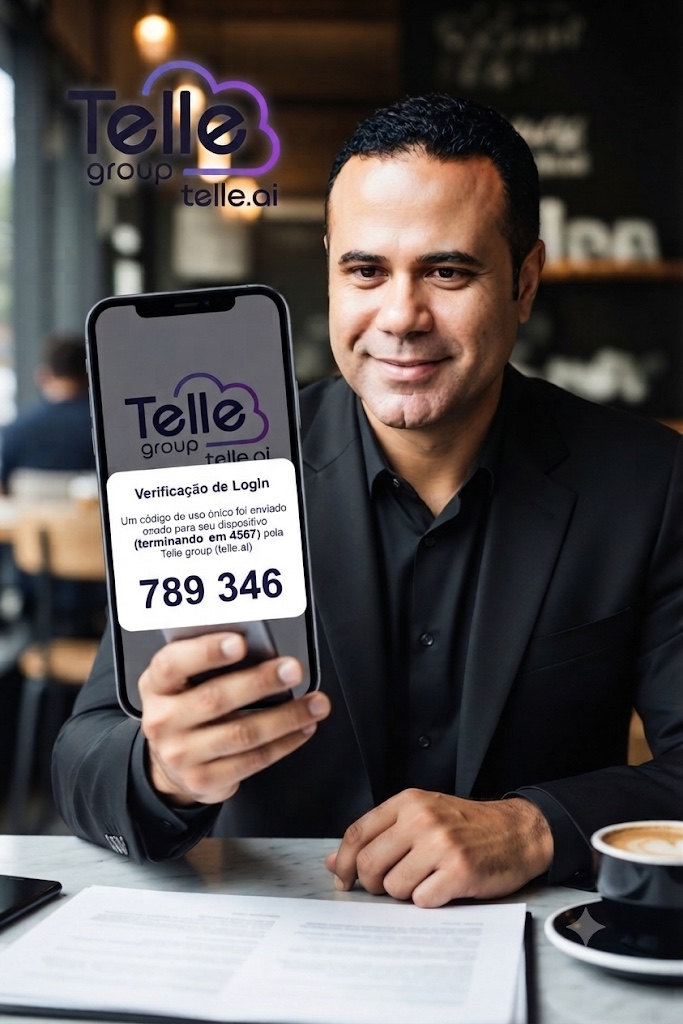
Digital security is no longer a competitive differentiator. Today, it is a basic requirement for any business that deals with accounts, data, payments, internal operations or customer information.
With weak, reused and leaked passwords circulating on different bases, relying only on login and password increases the risk of intrusions.
This is where two-factor authentication via SMS, also called 2FA via SMS, becomes an important layer of protection for B2B, SaaS, e-commerce companies, administrative portals and digital platforms.
What is 2FA authentication via SMS?
2FA stands for two-factor authentication.
In addition to the password, the user needs to confirm their identity by a second factor. In SMS, this second factor is usually a temporary code sent to the registered phone.
This code is called OTP, which stands for One Time Password. It must be unique, random, temporary and valid only for that authentication attempt or sensitive action.
The importance of identity validation
The foundation of a secure environment begins with knowing who is trying to access it.
Sending SMS OTP helps confirm that the user has access to the phone associated with the account. This reduces the risk of unauthorized access caused by leaked or stolen passwords.
2FA via SMS can be applied at different times:
- login to customer portal;
- access to administrative panel;
- password reset;
- change of registration data;
- payment confirmation;
- approval of sensitive operation;
- verification of new device;
- account creation.
The more critical the action, the greater the need for additional validation.
SMS authentication API
For developers and IT managers, integration needs to be simple and reliable.
An SMS authentication API allows you to incorporate the sending of verification codes directly into the system flow. The backend generates the OTP, securely records the event, and triggers the SMS API to deliver the code to the user.
This model can be used in:
- e-commerce;
- ERPs;
- CRMs;
- SaaS platforms;
- mobile applications;
- B2B portals;
- internal systems;
- marketplaces;
- financial platforms.
The most important thing is that code validation always happens on the server, never just on the front-end.
Best practices for SMS OTP
OTP needs to balance security and usability.
Best practices:
- generate random code;
- use short validity, such as 3 to 5 minutes;
- only allow single use;
- invalidate old codes when a new one is requested;
- limit incorrect attempts;
- apply temporary block on abuse;
- do not store the code in plain text;
- save only the OTP hash;
- log events without exposing the code;
- monitor resubmissions and failed attempts.
These controls reduce the risks of brute force, code reuse and exploitation of poorly implemented flows.
Security beyond login
2FA doesn’t just need to exist at sign-in.
Companies can use SMS to validate critical actions throughout the user journey.
Examples:
- confirmation of transactions;
- approval of registration changes;
- password change alert;
- login notification on new device;
- account recovery validation;
- notification of suspicious attempt;
- preventive blocking with user guidance.
This continued use strengthens the perception of security and helps reduce harm in suspicious situations.
Critical notifications via SMS
Not every security message is an OTP code.
Critical notifications via SMS help the user know when something important has happened on the account. If a password has been changed, access from a new device or an attempt has been blocked, the user needs to be informed quickly.
A good message should be short, clear and guide the next action.
Example:
We detected an attempt to access your account. If that was you, ignore this message. If you don’t recognize it, access your account and change your password.
Avoid including sensitive data or suspicious links. In security, clarity is also protection.
Flash SMS and user experience
Some operations evaluate features such as Flash SMS, in which the message appears directly on the device’s screen.
This type of feature can improve visibility in some scenarios, but must be analyzed carefully, considering compatibility, user experience, carriers, local rules, and security requirements.
In most projects, the essential point is not just the format of the message, but the quality of the flow: temporary code, reliable delivery, server-side validation and monitoring.
Fraud monitoring and alerts
A mature 2FA implementation via SMS needs metrics.
Follow:
- delivery fee;
- medium latency;
- failures by operator;
- volume of resubmissions;
- incorrect attempts;
- expired codes;
- blocks due to abuse;
- suspicious patterns by IP, user or phone;
- authentication conversion.
With this data, the technical team can identify bottlenecks and act before instability or abuse becomes an incident.
LGPD and data protection
Authentication SMS involves personal data.
Therefore, the company must observe LGPD, purpose of processing, data minimization, log security, access control and adequate retention.
It is also essential to protect API keys, tokens, and messaging credentials. No secrets should appear on the front end, in public logs, error messages, or public documentation.
Trust as a result
Implementing 2FA via SMS is not just adding a code field on the screen.
It’s about creating a security flow with authentication, validation, monitoring, experience and governance.
When well structured, 2FA via SMS helps companies protect access, reduce the risk of fraud, demonstrate care with data and increase customer trust.
Tellegroup supports companies with corporate SMS, transactional messaging, cybersecurity, cloud telephony and solutions for operations that need stability and control.
Speak to a Tellegroup expert and see how to implement 2FA authentication via SMS in your business.