
 Joaldo Lima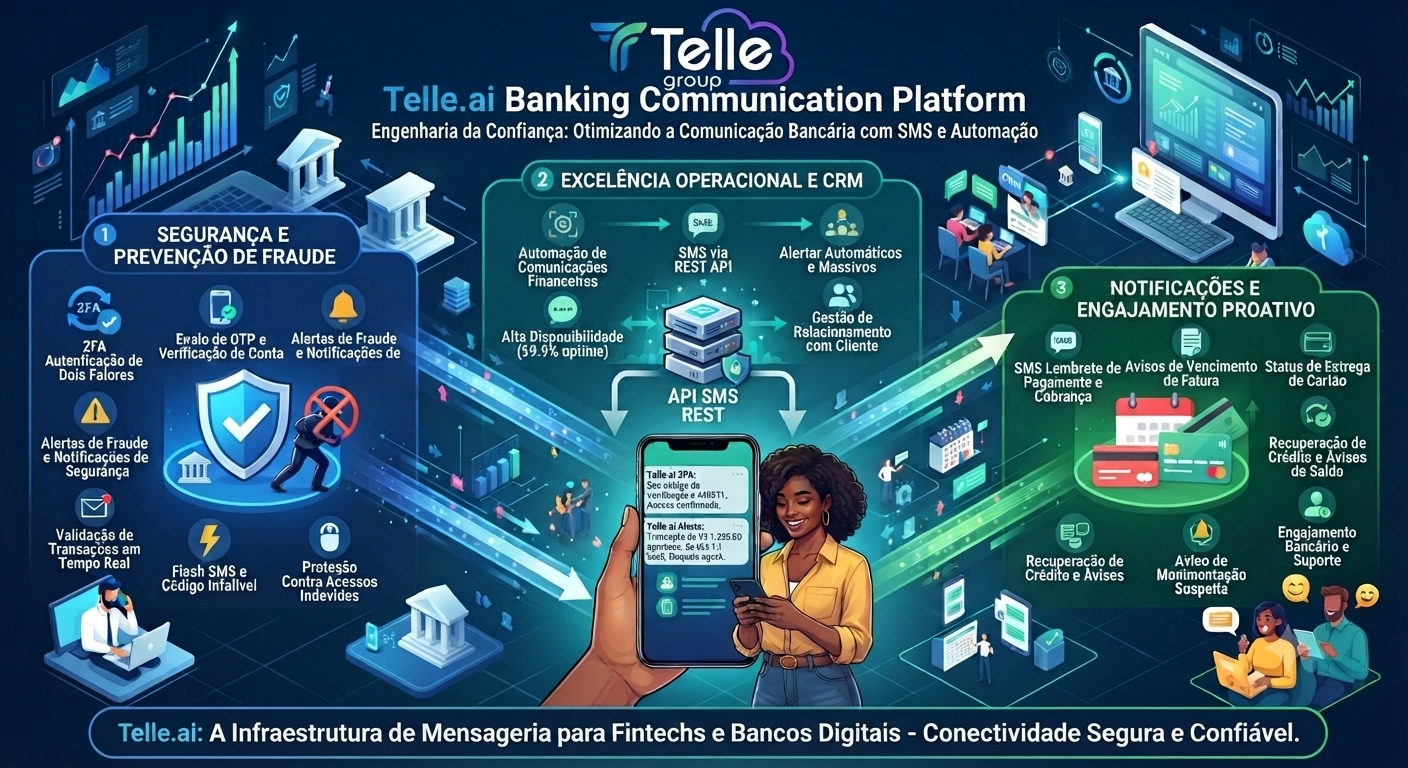
In today’s financial ecosystem, communication is not just relationships. It’s part of security.
For digital banks, fintechs, wallets and payment platforms, a corporate SMS platform can serve as the foundation for proactive, transactional and reliable communication.
When integrated with the backend, CRM and anti-fraud systems, the SMS API is no longer just a sending channel. It becomes an operational layer to validate access, inform customers, reduce uncertainty and reinforce trust.
Engineering trust in the financial sector
Banking confidence is born from predictability.
The customer wants to know when a transaction happens, when a card is on its way, when there is a risk of fraud, when a charge is due and when a request has been completed.
If the institution does not communicate, the customer seeks support. If you communicate late, it generates anxiety. If you communicate insecurely, it opens up space for scams.
Therefore, banking communication needs to be:
- fast;
- objective;
- traceable;
- safe;
- integrated into systems;
- consistent across different journeys.
Security and fraud prevention
The foundation of trust begins with critical events.
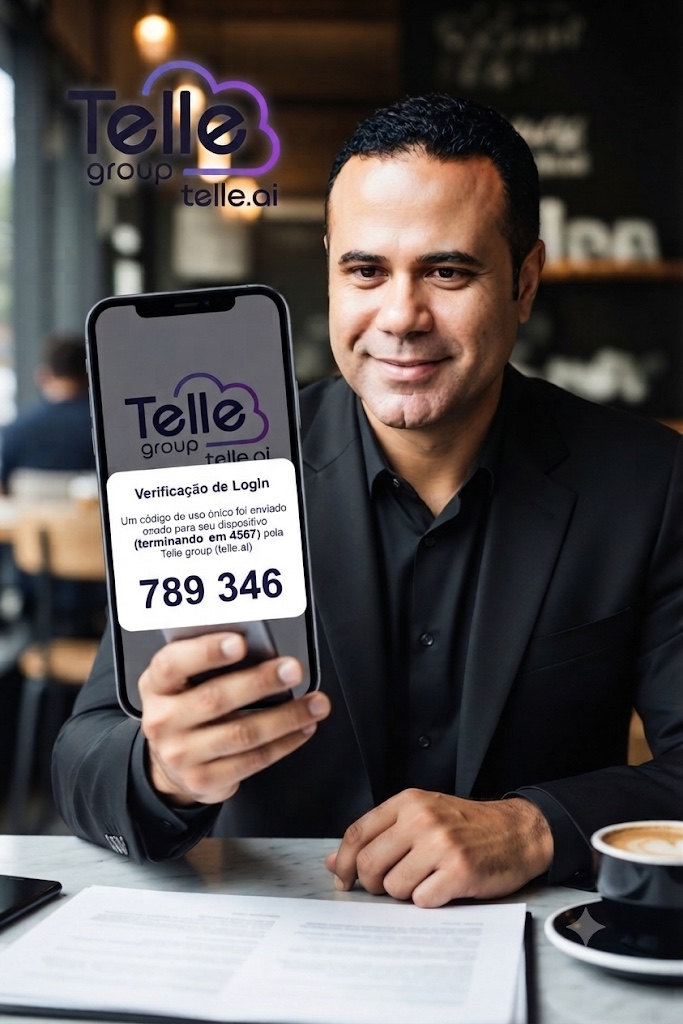
SMS can support flows such as two-factor authentication, account verification, device confirmation, transaction validation, and suspicious behavior alert.
In a well-designed flow, the user receives temporary code or a clear notification about an action in progress. The backend validates context, tracks retries, applies expiration, and logs events for auditing.
Usage examples:
- sending OTP for login;
- verification of new device;
- alert of attempted access;
- confirmation of registration change;
- suspicious transaction warning;
- sensitive operation validation.
SMS should not carry unnecessary sensitive data. It must clearly inform and guide safe action.
OTP, 2FA and genuine authentication
Sending OTP via SMS remains relevant because of reach.
Many users do not have an authenticator app configured, may be without mobile internet or have not yet activated biometrics. In these cases, SMS can be an accessible validation layer.
For fintechs, the central point is secure implementation:
- random code;
- short validity;
- single use;
- hash in the backend;
- limit of attempts;
- temporary block on abuse;
- invalidation of previous codes;
- monitoring of resubmissions;
- clear anti-fraud messages.
It is also important to educate the customer: the institution should never request codes by phone, WhatsApp, email or human assistance.
SMS API as infrastructure
A robust SMS API allows communication to be triggered by real events.
Instead of manual sending, the system triggers messages when something happens in the backend, in the CRM, in the anti-fraud engine, in the financial core or in customer service.
This model improves scale and consistency.
Some common integrations:
- REST API for transactional sending;
- financial CRM events;
- anti-fraud engine;
- banking core;
- billing system;
- service platform;
- delivery and latency monitoring.
With this, fintech gains control over queues, failures, resends, critical messages and operational indicators.
Operational excellence and CRM
SMS is also an operational CRM tool.
Customers need to receive information about request status, card delivery, billing, expiration, access recovery, pending documentation and service updates.
When these messages are automated, the relationship becomes more predictable.
Examples:
- invoice due date reminder;
- card delivery status;
- notice of pending documentation;
- update of request under analysis;
- financial scheduling reminder;
- confirmation of service;
- support communication.
The gain appears on two fronts: the customer becomes more informed and the operation reduces repetitive calls.
Notifications and proactive engagement
Proactive communication is not about sending out more messages.
It’s about identifying moments when a short message resolves a question, prevents a failure or improves the experience.
For digital banks, this may mean giving notice before the customer needs to ask. For fintechs, it can mean reducing work abandonment, late payments or friction in critical processes.
SMS works well when it is used to:
- urgency;
- confirmation;
- security;
- operational status;
- objective reminder;
- journey recovery.
Promotional and transactional messages must have different strategies, with their own rules, frequency and metrics.
Metrics that matter
Without monitoring, bank communication becomes a black box.
Important metrics:
- delivery fee;
- latency per route;
- failures by operator;
- volume per event;
- reshipping fee;
- OTP attempts;
- authentication conversion;
- reduction of calls;
- response to anti-fraud alerts;
- unsubscribes when applicable.
These indicators help find bottlenecks and improve both security and customer experience.
Governance, LGPD and data security
Fintechs need to treat SMS with governance.
Don’t just plug in an API and start shooting. You need to define rules for content, purpose, retention, logs, internal access, key protection and incident response.
Essential care:
- do not include balances or sensitive data in the SMS;
- avoid suspicious links or shorteners without governance;
- protect API tokens and credentials;
- limit access to logs;
- apply LGPD and data minimization;
- review messages to reduce social engineering;
- maintain audit trail.
Secure communication depends on both technology and process.
SMS as a proactive communication backbone
When well implemented, corporate SMS becomes a layer of trust between institution and customer.
It supports security, relationships, notifications, CRM, billing, support and automation. For digital banks and fintechs, this means reducing noise, increasing predictability and delivering a more stable experience.
Tellegroup supports companies with corporate SMS, messaging API, cloud telephony, cybersecurity and solutions for financial operations that require availability, control and scale.
Speak to a Tellegroup expert and see how to structure a banking communication platform with SMS and automation.